School-Age Stuttering Therapy: A Practical Guide is a comprehensive manual that covers the entire assessment and intervention process, presented with sufficient background to help you understand the goals of therapy and how to adapt those goals for different children.
Publications/Resources
Practical materials for professionals
"STR's resources are SO practical and useable! They give me the rationale AND the application of what to say and do in stuttering therapy. "
-A returning customer
What sets our materials apart is that they are created by specialists who have dedicated their entire careers to researching, working with, and supporting those who stutter.
With combined 70 years experience, STR is the place to find high-quality, evidence-based, and PRACTICAL materials to strengthen your confidence in stuttering assessment and therapy.
In 2011, Nina Reeves and her writing partner J. Scott Yaruss created their own publishing company,
Stuttering Therapy Resources, Inc
(STR) with the mission of “Helping SLPs help people who stutter.” Nina co-authors products for STR and each product in the catalog is designed for practical information on topics related to fluency disorders.
In addition, Nina has authored numerous peer-reviewed and media-based articles on topics related to stuttering disorders. CV available upon request.
If you would like a list of articles or have questions regarding a specific article, please contact Nina
directly.
Early Childhood Stuttering Therapy: A Practical Guide provides a comprehensive and detailed description of the entire intervention process for preschool and young school-age children who stutter, starting with the initial contact and pre-referral process, through conducting a comprehensive evaluation that focuses on the risk that the child might continue to stutter, to providing less-direct therapy to help parents and others create fluency-facilitating environments to enhance a child's fluency, and all the way through providing direct therapy to help the child improve his fluency and communication attitudes.
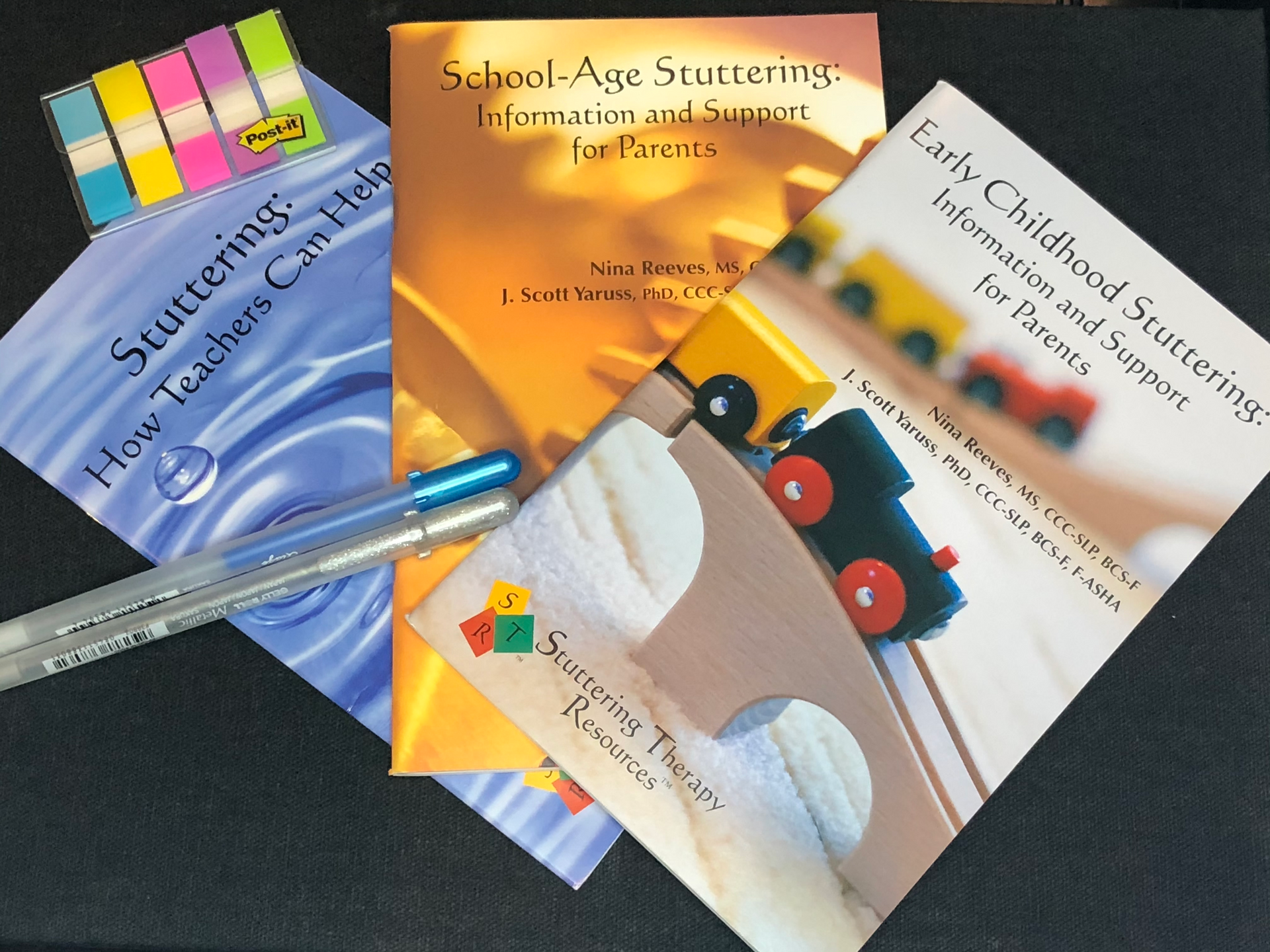
Early Childhood Stuttering: Information and Support for Parents is designed to reduce the fears and concerns often expressed by caregivers of young children who stutter. Written specifically for caregivers, this helpful booklet provides important background information about stuttering that will support families in making appropriate decisions about whether and when to seek an evaluation or treatment. Share this booklet with the caregivers of young children who stutter and help them know that there is hope for their child--and themselves!
School-Age Stuttering: Information and Support for Caregivers is a 56-page booklet helps to reduce the fears and concerns often expressed by family members of school-age children and teens who stutter. Written specifically for parents and other caregivers, this expert resource helps to calm parents' fears while giving them the knowledge they need to provide optimal support for their children/teens ages 6 to 18.
School-Age Stuttering: How Teachers Can Help is a 28-page booklet that describes ways educators, coaches, support staff, and others can work together to help children who stutter in the school setting. Give one to everyone in your school, and build a support network that will help your students both in and out of the classroom.
The tested strategies in Minimizing Bullying for Children Who Stutter can help your clients break free from the burden of bullying. This comprehensive program includes a 125-page guidebook for speech-language pathologists, as well as accompanying workbooks for parents, teachers, school administrators, and children who stutter. Each component of the program includes worksheets, forms, therapy activities, and rationale so that everyone involved can work together to diminish--and even prevent--the negative consequences of bullying.
The Overall Assessment of the Speaker’s Experience of Stuttering (OASES) measures the impact of stuttering on a person’s life. This easy-to use instrument, authored by J. Scott Yaruss and Robert Quesal, is designed to be used throughout the diagnostic and treatment process to show how stuttering affects your clients. The OASES is also valuable for research evaluating treatment outcomes.
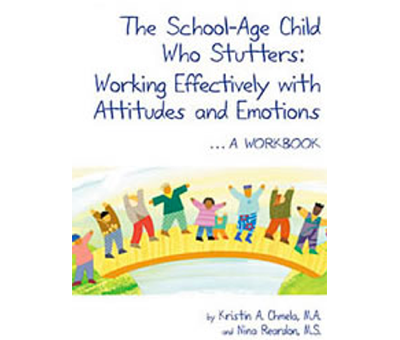
Nina has also co-authored publications for both the National Stuttering Association
and the Stuttering Foundation of America. Click below for more information on these materials.